Anxiety: Finding My Way Through the Noise
Anxiety can be a strange thing. Sometimes it creeps in quietly, and other times it feels like it has kicked the door down, moved all the furniture around and decided it is staying for the weekend.
For me, anxiety can be scary, overwhelming and completely exhausting. It can make ordinary things feel much bigger than they really are, and sometimes my brain seems determined to think about absolutely everything at once. If you've experienced anxiety, you'll probably know exactly what I mean.
The frustrating thing is that there isn't one magic trick that makes anxiety disappear. What works for one person might not work for another, and even the things that usually help me don't necessarily work every single time. I've learnt that managing anxiety is more about finding little things that take the edge off and help me feel more in control.
Learning to breathe — literally!
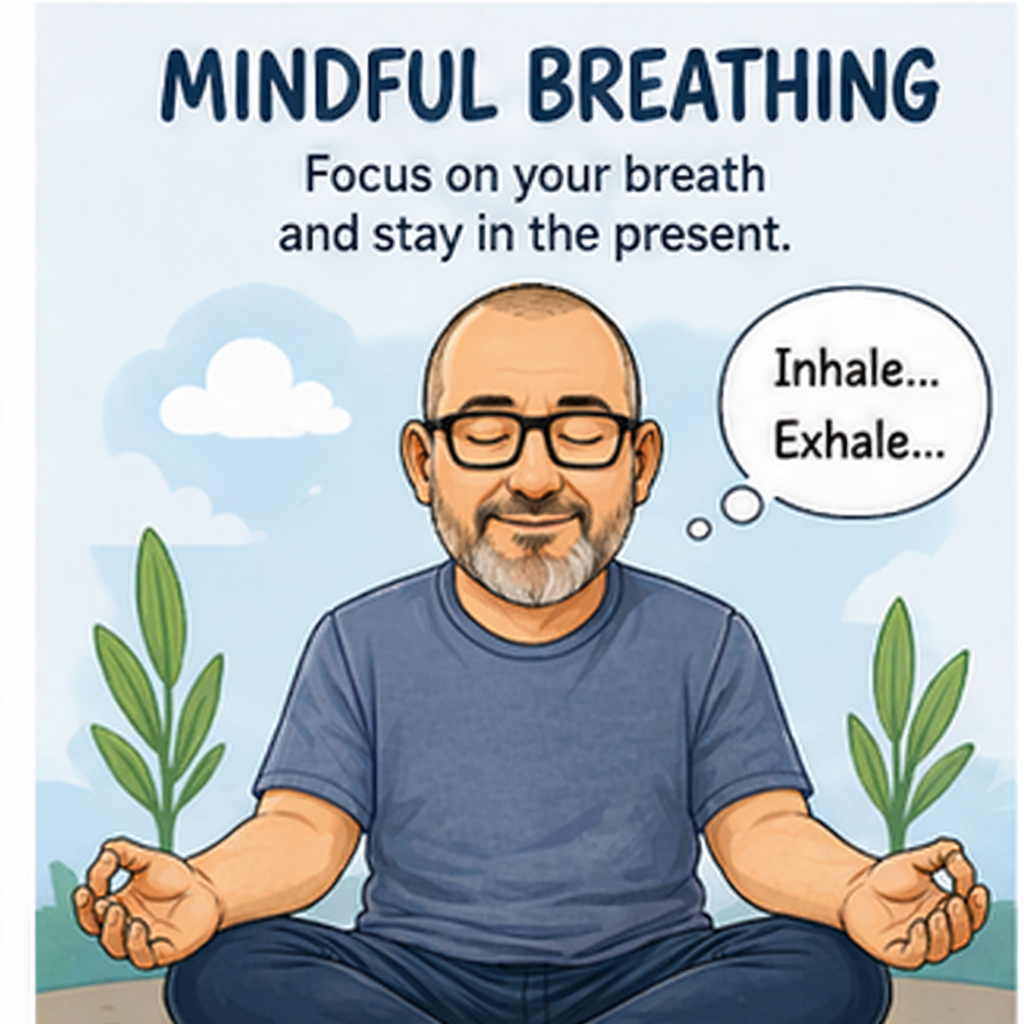
One of the simplest things I come back to is mindful breathing.
When anxiety takes over, I can find myself breathing differently without even noticing it. Taking a moment to stop and pay attention to my breathing helps me slow things down. I don't necessarily try to force my breathing to change. I just notice it.
In through the nose, out again, and try not to overthink it.
The beauty of your breath is that you don't need any fancy equipment, an app subscription or a special outfit. It's already there with you!
Mindfulness works in a similar way for me. Rather than getting completely caught up in what might happen tomorrow, or replaying something that happened yesterday, I try to bring myself back to what is actually happening right now.
Sometimes that means noticing what I can see, hear and feel around me. It sounds simple, but when my brain is running at 100 miles an hour, simple can be exactly what I need.
Meditation — without having to become a monk
I've also found meditation helpful.
Now, I'll be honest, I don't always sit peacefully for half an hour with my legs crossed, looking like I've achieved complete inner peace. Sometimes my version of meditation is simply sitting somewhere quiet, concentrating on my breathing and trying to give my brain a few minutes off.
And that's okay.
Meditation doesn't have to be perfect. My mind wanders. Of course it does. That's what minds do! The important thing is noticing when it has wandered and gently bringing my attention back.
Even a few quiet minutes can sometimes make a difference.
Talking really does help
When anxiety gets bad, my instinct can sometimes be to keep everything to myself. I don't want to bother anyone, I don't always know how to explain how I'm feeling, and sometimes I worry that I'll sound silly.
But talking to someone I trust can make a huge difference.
I don't always need somebody to fix anything. Sometimes I just need somebody to listen. Saying things out loud can make them feel less enormous, and having someone say, "I understand" or "That sounds really difficult" can be incredibly reassuring.
I've learnt that asking for support isn't a sign that I'm failing. It's actually one of the ways I look after myself.
And if talking face-to-face feels too much, a text message can be a good place to start. You don't have to deliver a perfectly written speech about your feelings. A simple "I'm having a bit of a difficult day" can be enough.
Sometimes I just need to be alone
There are also times when I need the complete opposite.
Sometimes I need to step away from everyone, find somewhere quiet and just be.
When I'm overwhelmed, having some peace and quiet gives me the chance to breathe, process things and let my head settle. I don't feel guilty about needing that time anymore.
But I've also learnt that there is a difference between taking some much-needed quiet time and completely isolating myself.
Too much time alone isn't great for me. If I disappear into my own little bubble for too long, the thoughts in my head can become louder rather than quieter. Anxiety loves an empty room sometimes!
So I try to find a balance. If I need an hour to myself, I take it. Then, when I'm ready, I try to reconnect with people, go for a walk, have a chat or simply get back into the world around me.
Grounding myself when anxiety takes over
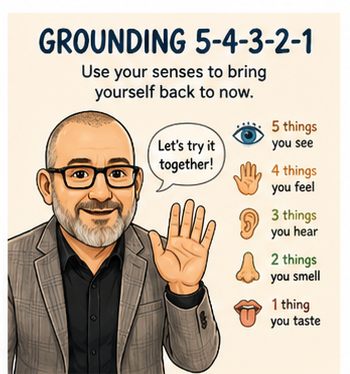
Another technique I find useful is the 5-4-3-2-1 grounding exercise.
When my thoughts are racing, I can bring my attention back to my surroundings by noticing:
- 5 things I can see
- 4 things I can feel or touch
- 3 things I can hear
- 2 things I can smell
- 1 thing I can taste
It might sound a little odd at first, but that's actually part of the point. It gives my brain something else to concentrate on and brings me back into the present moment.
Sometimes I also use journaling. Getting thoughts out of my head and onto paper can make them feel a little less chaotic. I don't worry about spelling, grammar or writing anything profound. It's not an English exam. It's just somewhere for my thoughts to go!
Being kinder to myself
One of the biggest things I'm learning is self-compassion.
When I'm anxious, it's very easy to become frustrated with myself.
"Why am I feeling like this?"
"I should be able to cope."
"What's wrong with me?"
But I wouldn't speak to a friend who was struggling like that, so why should I speak to myself that way?
I've started trying to talk to myself more like I would talk to someone I care about. Sometimes that means reminding myself that having a difficult day doesn't erase all the progress I've made.
- I'm allowed to struggle.
- I'm allowed to take a break.
- And I'm allowed to start again tomorrow.
Small things can make a big difference
I've also found that keeping some gentle structure in my day can help. Planning small activities, getting outside, going for a walk, writing things down, practising gratitude or doing something I enjoy can all help shift my focus.
They aren't magical cures, and sometimes anxiety will still turn up uninvited.
But I've learnt that I don't always have to make anxiety disappear. Sometimes the goal is simply to turn the volume down.
The coping techniques I use are part of that. Mindful breathing, thought challenging, grounding, positive self-talk, setting boundaries, relaxation, visualisation, social connection, self-compassion and journaling are all tools I can reach for when I need them. (Mental Health Basingstoke)
I don't use all of them every day. I don't have a perfectly organised "anxiety toolkit" sitting on a shelf waiting for me. Some days I might need quiet. Other days I need company. Sometimes I need to write everything down, and sometimes I just need to get outside and move.
It's about figuring out what works for me.
There is no shame in asking for help
Living with anxiety can be exhausting, and while coping techniques can be incredibly useful, I also believe it's important to recognise when you need some extra support.
Talking to someone you trust, reaching out to a professional or finding a supportive community can be an important part of looking after yourself.
You don't have to wait until you're completely overwhelmed before you ask for help.
For me, managing anxiety isn't about becoming a person who never feels anxious. I'm not sure that person exists!
It's about understanding myself a little better, recognising when things are becoming too much and having a few tools I can use to help me through it.
- Some days I cope brilliantly.
- Some days I don't.
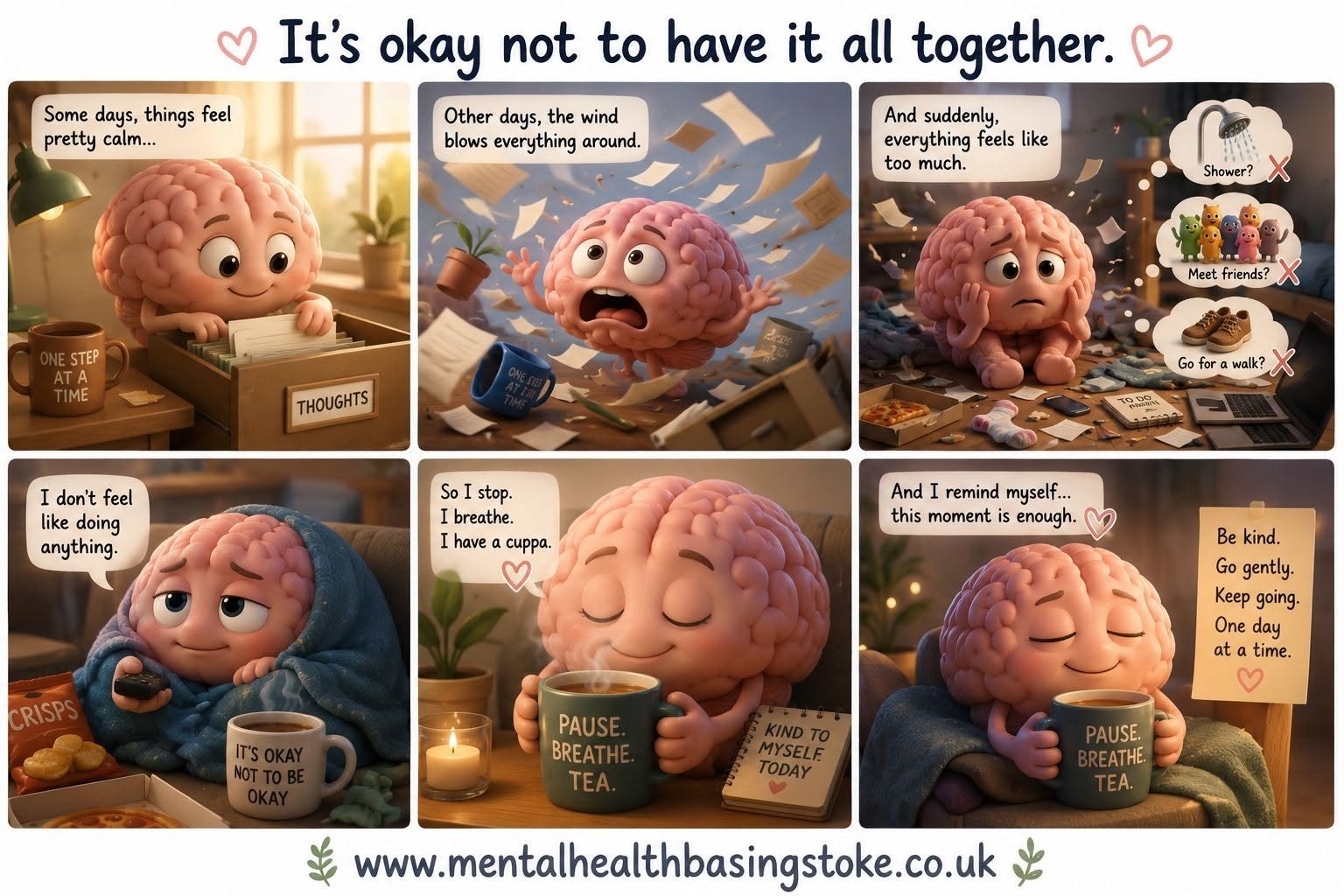
- And that's okay.
If you're struggling with anxiety too, be kind to yourself. Take a breath. Take a break. Talk to someone. Have some quiet time if you need it — but don't disappear completely.
And remember, you don't have to figure it all out at once.
Sometimes getting through the next ten minutes is more than enough.