Is It Heat or Anxiety? Understanding why hot weather can make you feel more anxious.
As the temperature rises, many people notice something else rising too their anxiety.
If you've ever found yourself feeling unusually on edge during a heatwave, you're not alone. Many of the physical sensations caused by being too hot are remarkably similar to the symptoms of anxiety. When this happens, it's easy for your brain to misinterpret what's happening, leaving you feeling overwhelmed or even convinced you're having a panic attack.
Why Heat Can Trigger Anxiety
Our bodies are incredibly clever. When we get too hot, they immediately begin working to cool us down. This natural process includes increasing your heart rate, producing sweat and redirecting blood flow to regulate your temperature.
These are completely normal responses.
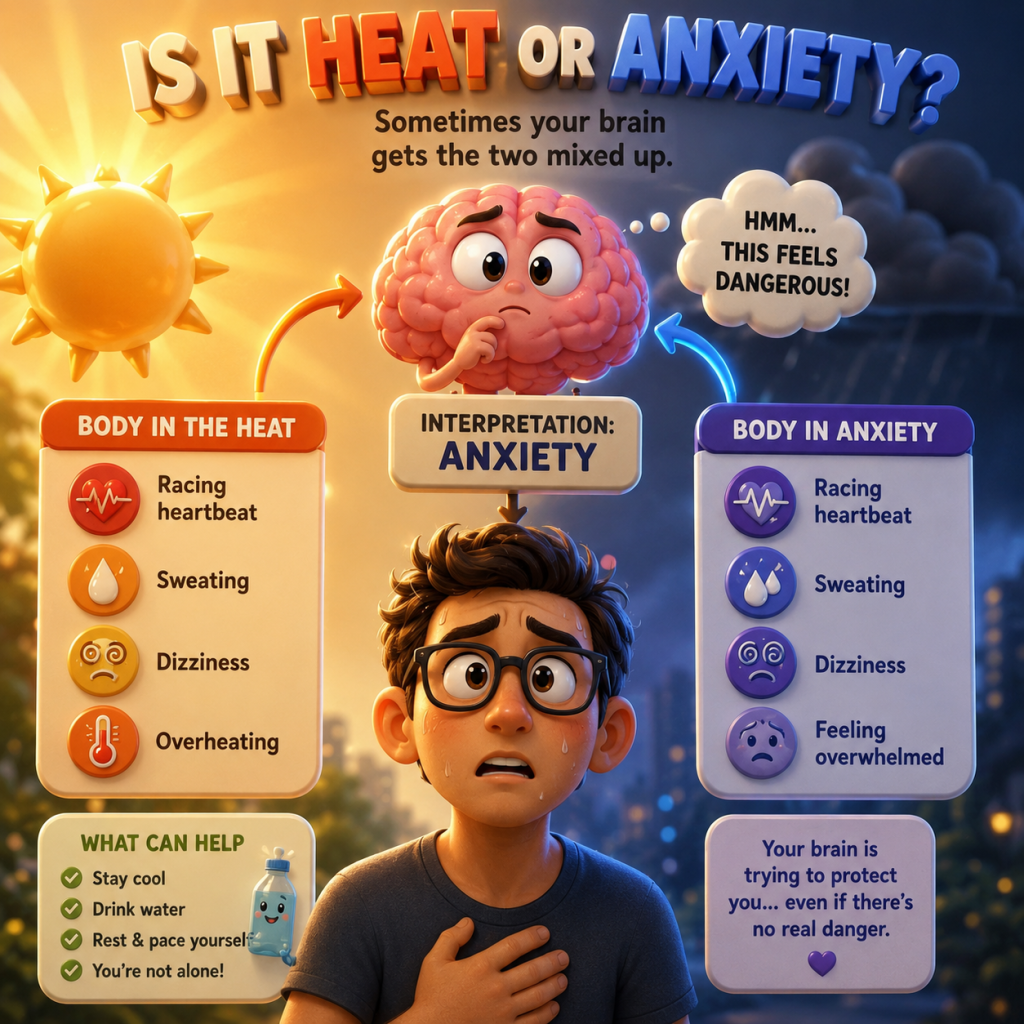
The problem is that they can also mimic the physical symptoms of anxiety, including:
- A racing heart
- Sweating
- Feeling dizzy or light-headed
- Shortness of breath
- Feeling shaky or restless
If you've experienced anxiety before, your brain may recognise these sensations and think, "Here we go again." This can create a cycle where physical symptoms caused by heat become fuel for anxious thoughts, making both feel more intense.
The Mind-Body Connection
Our brains are constantly trying to keep us safe.
When they notice physical changes, they naturally look for an explanation. During hot weather, your brain doesn't always distinguish between "I'm overheating" and "I'm anxious."
Instead, it may interpret those bodily sensations as a threat.
Once that happens, adrenaline is released, your breathing may become quicker, and the anxiety can build even further.
Understanding this process is often the first step in breaking the cycle.
Other Reasons Anxiety Can Feel Worse in Summer
Hot weather doesn't just affect our body temperature.
It can also influence other factors that help regulate our mental wellbeing.
Poor Sleep
Warm nights often mean disrupted sleep. Even one or two nights of poor-quality sleep can leave us feeling emotionally sensitive, less resilient and more vulnerable to anxious thoughts.
Dehydration
When we're dehydrated, our blood volume reduces, meaning the heart has to work a little harder. This can increase feelings of dizziness, fatigue and palpitations, all of which can be mistaken for anxiety.
Physical Stress
Heat places additional demands on the body. Even everyday activities can feel more exhausting, leaving us feeling irritable, overwhelmed or mentally drained.
How to Tell the Difference
Sometimes it's difficult to know whether you're experiencing anxiety or simply feeling the effects of the heat.
Ask yourself:
- Have I had enough water today?
- Have I been sitting in the sun or a hot environment?
- Am I due to eat?
- Could I simply be overheated?
If the answer is yes, try cooling yourself down before assuming the worst.
Move into the shade or an air-conditioned room, sip cool water, slow your breathing and give your body a chance to recover.
You may be surprised how quickly those anxious feelings begin to settle.
Simple Ways to Support Yourself During Hot Weather
There are several practical things you can do to reduce the impact of heat on both your body and your mental wellbeing.
- Drink water regularly, even before you feel thirsty.
- Wear light, breathable clothing.
- Avoid strenuous activity during the hottest part of the day.
- Use fans, cool showers or damp towels to lower your body temperature.
- Eat regular meals to keep your energy levels stable.
- Prioritise sleep wherever possible.
- Slow down and give yourself permission to rest.
Remember, self-care isn't being lazy. It's responding to what your body needs.
When Anxiety Needs More Support
Although heat can make anxiety feel worse, ongoing anxiety that affects your daily life deserves attention regardless of the weather.
If anxious thoughts are becoming frequent, you're avoiding situations because of fear, or panic attacks are becoming more common, speaking to a qualified therapist can help you understand what's happening and develop effective coping strategies.
You don't have to manage it alone.
A Final Thought
One of the most reassuring things to remember is this:
Not every racing heart means you're anxious. Sometimes your body is simply trying to keep you cool.
Understanding the connection between heat and anxiety helps you respond with curiosity rather than fear.
Instead of asking, "What's wrong with me?", try asking, "What does my body need right now?"
A drink of water, a cool place to sit and a few slow breaths may be exactly what your nervous system has been asking for.
If anxiety is becoming difficult to manage, support is available. At Mental Health Basingstoke, we believe no one should have to face anxiety alone. Whether you're looking for information, local resources or professional support, taking the first step towards understanding your mental health is something to be proud of.