🌿 Mindful Breathing
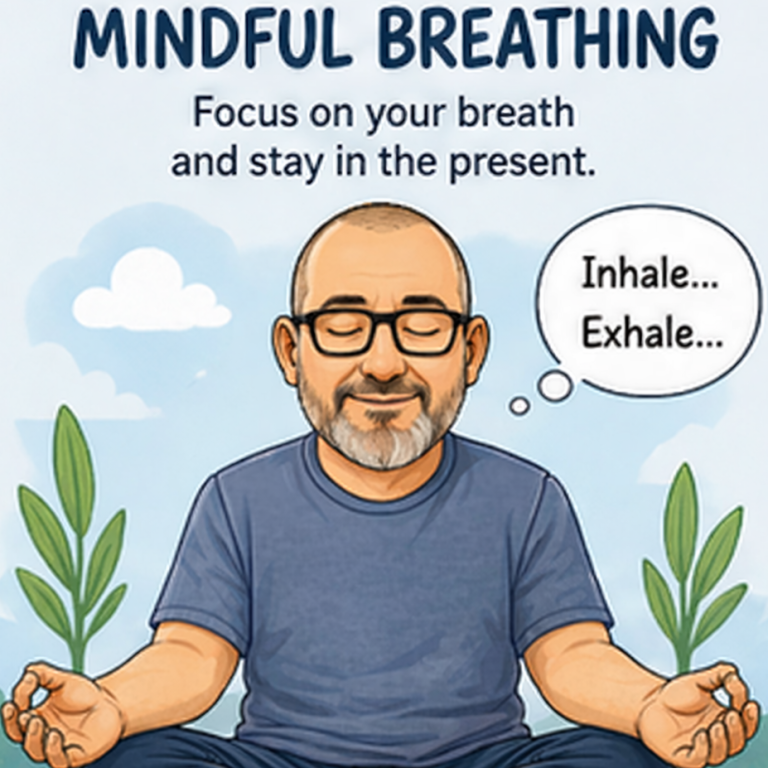
Mindful breathing means paying attention to your breath. You notice how it feels as you breathe in and out.
You do not need to change your breathing. Just notice it. If your mind wanders, gently bring it back to your breath.
💡 Your breath is always with you. That makes it a great way to feel calm.
What are the benefits?
Try this simple exercise:
- Sit or stand comfortably
- Close your eyes or look down
- Breathe in slowly through your nose
- Breathe out slowly through your mouth
- Notice how your breath feels
- If your mind wanders, gently bring it back
🌼 Start with just 1–2 minutes. That’s enough to help.
How to try it
It can:
- Slow your heart rate
- Help your body relax
- Give your mind a break
Mindful breathing can help you:
- Feel less stressed or worried
- Focus better
- Sleep more easily
- Feel more calm and present
When to use it?
You can use mindful breathing anytime, especially when you feel:
- Worried
- Stressed
- Upset
- Overwhelmed
You do not need to do this perfectly.
It is okay if your mind wanders.
Each time you bring your focus back to your breath, you are helping yourself.
A gentle reminder
Production Date: April 2026
Next review: April 2029
💭 Thought Challenging
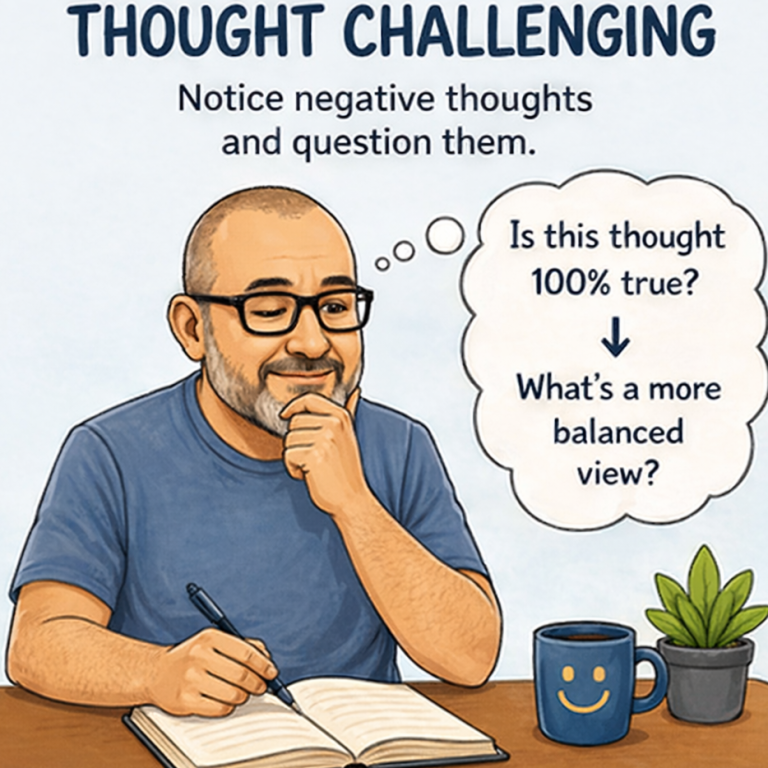
Thought challenging means noticing unhelpful thoughts and asking if they are really true.
Sometimes our minds tell us things that are not fully correct, like “I always mess up” or “No one likes me.”
Thought challenging helps us slow down and look at these thoughts in a kinder, more balanced way.
What are the benefits?
Next time you notice a negative thought, try asking:
- Is this thought 100% true?
- What is the evidence for it?
- Is there another way to look at this?
For example:
“I always get things wrong” → “Sometimes I get things wrong, but I also get things right.”
How to try it
Our thoughts can affect how we feel.
If we only think negative thoughts, we may feel sad, worried, or upset.
When we challenge these thoughts, we can start to feel better.
It helps us:
- See things more clearly
- Be kinder to ourselves
- Feel calmer and more in control
When to use it?
A gentle reminder
You can use it if you catch yourself thinking things like:
- “I can’t do this”
- “Everyone is better than me”
- “Something bad will happen”
💡 This is a good time to pause, take a breath, and gently question the thought.
Everyone has negative thoughts sometimes. That’s normal.
You are not your thoughts.
You can learn to question them and choose a more helpful way to think.
Production Date: April 2026
Next review: April 2029
🙏 Gratitude Journaling
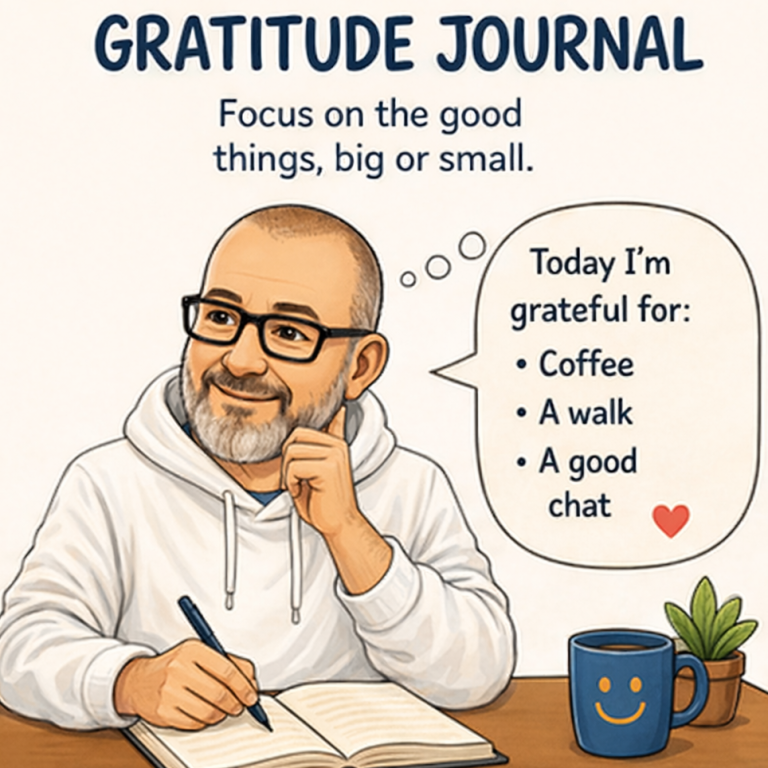
Gratitude journaling means writing down things you are thankful for.
They can be big or small, like a sunny day, a kind smile, or a nice walk.
It helps you notice the good things in your life..
What are the benefits?
How to try it
You can try this at any time of day.
Write down 3 things you are thankful for.
They can be simple, like:
- A cup of tea
- Talking to a friend
- Getting some fresh air
Try to think about why they made you feel good.
Focusing on good things can help lift your mood.
It can help you:
- Feel happier
- Worry less
- Notice positive moments
- Feel more hopeful
A gentle reminder
You do not need to find big things to be thankful for.
Small things matter too.
Even on hard days, there is often something good to notice.
When to use it?
You can use gratitude journaling:
- At the end of the day
- When you feel low
- When you are stressed
- When you want to feel more positive
Production Date: April 2026
Next review: April 2029
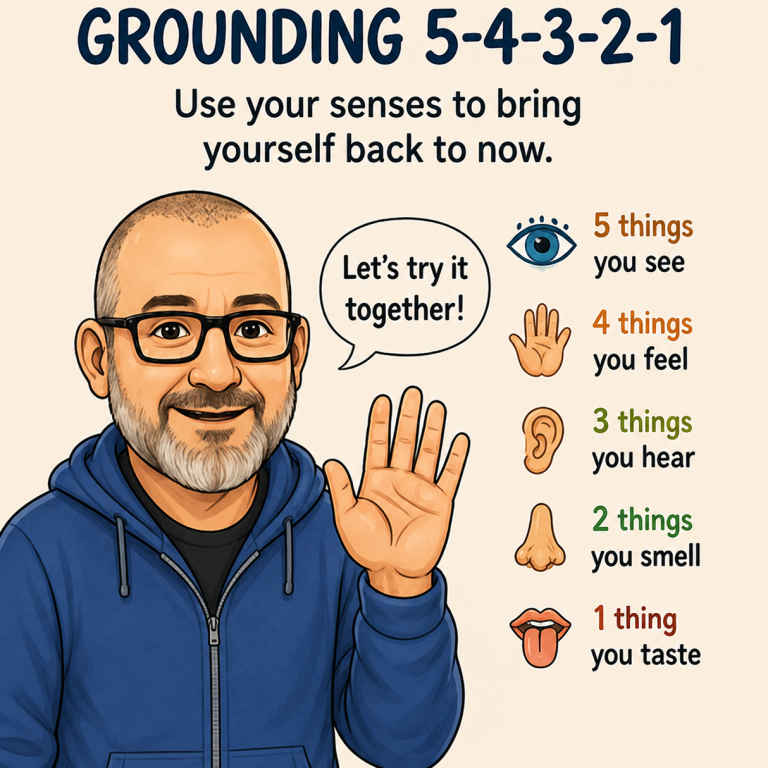
🌈 Grounding 5-4-3-2-1
This is a grounding exercise that uses your senses to help you feel calm.
It helps bring your focus back to what is around you right now.
What are the benefits?
How to try it
Look around and gently name:
- 5 things you can see
- 4 things you can feel
- 3 things you can hear
- 2 things you can smell
- 1 thing you can taste
Take your time and go slowly.
When you feel anxious or overwhelmed, your mind can race.
This technique helps you slow down and feel more in control.
It can:
- Reduce anxiety
- Help you feel calmer
- Bring your focus to the present moment
A gentle reminder
There is no right or wrong way to do this.
Take it at your own pace.
Each time you focus on your senses, you are helping your body feel safer.
When to use it?
You can use this when you feel:
- Anxious or panicky
- Overwhelmed
- Stressed
- Dizzy or disconnected
It can be helpful in busy places or when your thoughts feel too much.
Production Date: April 2026
Next review: April 2029
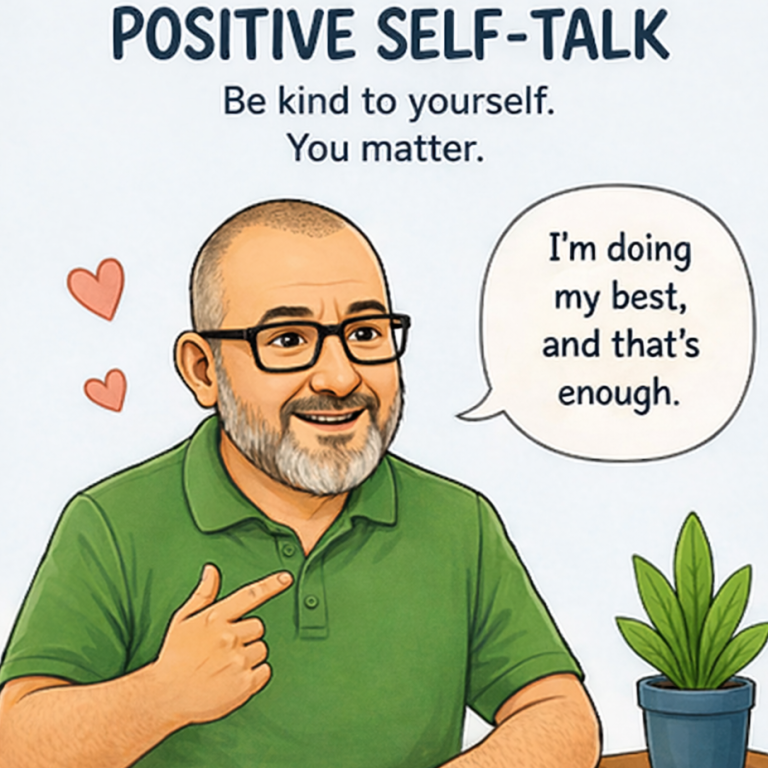
💬 Positive Self-Talk
Positive self-talk means speaking to yourself in a kind and helpful way.
It is about noticing negative thoughts and changing them into more supportive ones.
What are the benefits?
When you notice a negative thought, try to change it.
For example:
“I can’t do this” → “I can try my best”
You can also say kind things to yourself like:
- “I am doing okay”
- “I will get through this”
How to try it
When to use it?
The way we talk to ourselves affects how we feel.
Kind words can help you:
- Feel more confident
- Feel calmer
- Cope better with challenges
You can use positive self-talk when you feel:
- Worried
- Low
- Not good enough
- Stressed
A gentle reminder
Talk to yourself like you would talk to a friend.
Be kind, patient, and understanding.
Production Date: April 2026
Next review: April 2029
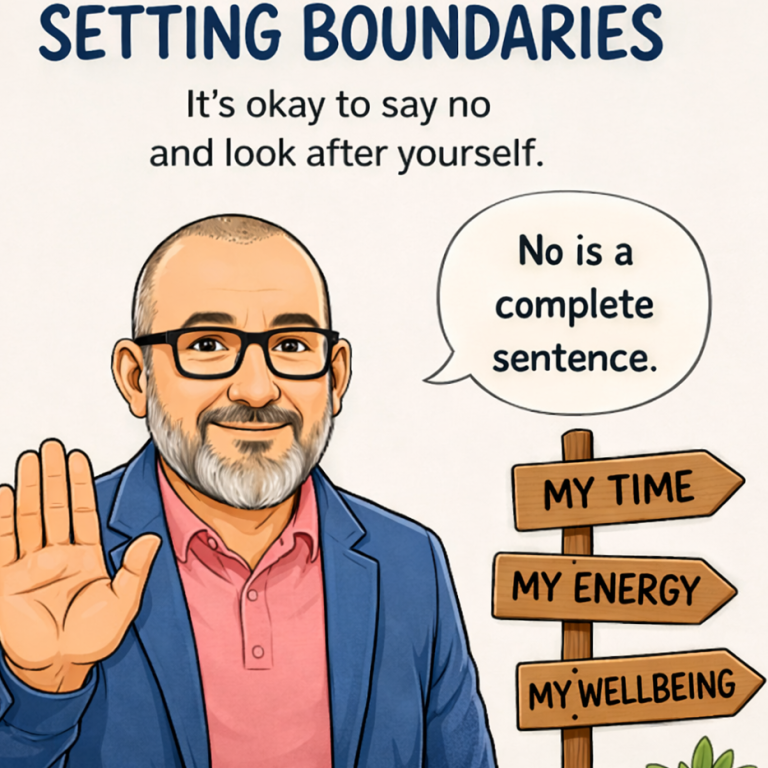
🚧 Setting Boundaries
Boundaries are limits we set to protect our time, energy, and wellbeing.
They help us say what is okay and what is not.
What are the benefits?
Start small.
You can:
- Say “no” when you need to
- Ask for time to think
- Be clear and calm about what you need
For example:
“I can’t do that today”
“I need some time for myself”
How to try it
When to use it?
Setting boundaries can help you:
- Feel more in control
- Protect your wellbeing
- Build healthier relationships
You can use boundaries when you feel:
- Overwhelmed
- Tired
- Pressured
- Like you are doing too much for others
A gentle reminder
It is okay to say no.
Looking after yourself is important.
You matter too.
Production Date: April 2026
Next review: April 2029
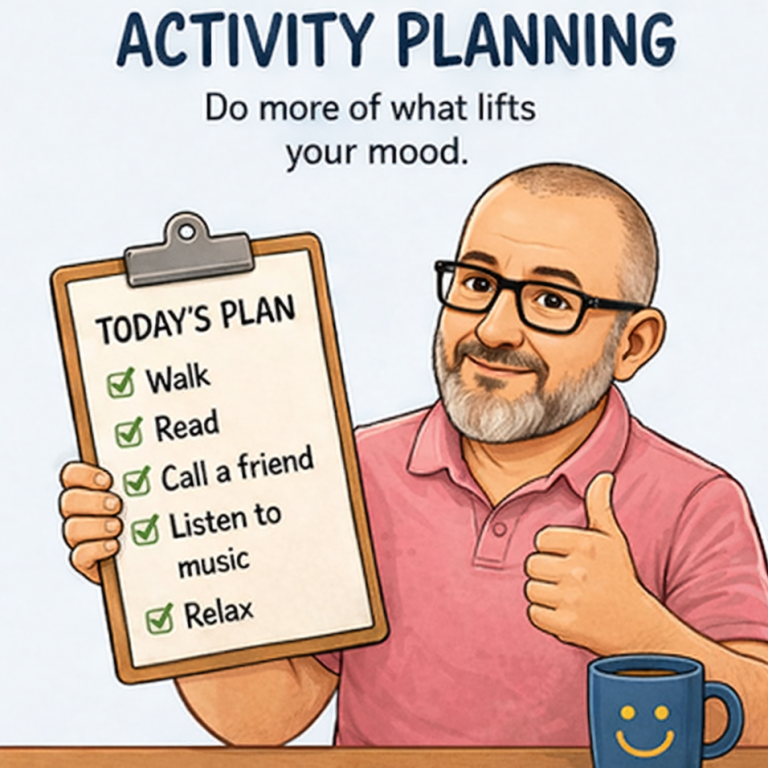
📋 Activity Planning
Activity planning means choosing and planning small things to do that help your mood.
These can be simple and enjoyable activities.
What are the benefits?
Make a simple plan for your day.
Choose a few small activities, like:
- Going for a walk
- Listening to music
- Calling a friend
- Doing something you enjoy
Start small and keep it simple.
How to try it
When to use it?
When we feel low, we may stop doing things we enjoy.
Planning activities can help you:
- Feel more positive
- Stay active
- Have something to look forward to
You can use activity planning when you feel:
- Low or unmotivated
- Bored
- Stuck in a routine
A gentle reminder
You do not have to do everything.
Small steps are enough.
Doing one thing is a good start.
Production Date: May 2026
Next review: May 2029
💪 Progressive Muscle Relaxation
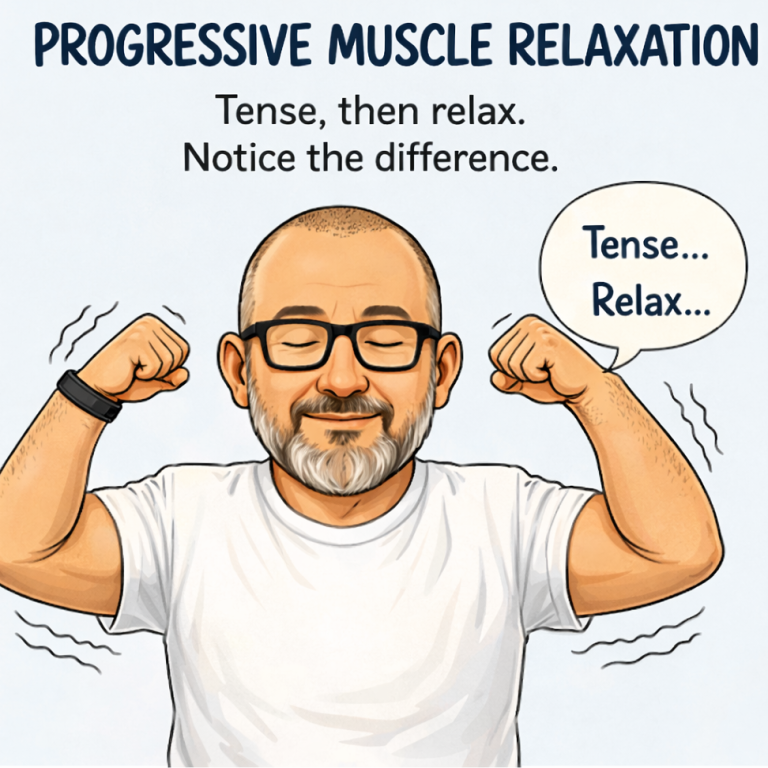
This is a relaxation exercise where you gently tense and then relax your muscles.
You work through different parts of your body.
What are the benefits?
Find a quiet place and get comfortable.
Then:
- Gently tense one part of your body (like your hands)
- Hold for a few seconds
- Slowly relax
- Notice the difference
Move through your body, like arms, shoulders, and legs.
How to try it
When to use it?
When we feel stressed, our muscles can feel tight.
This exercise helps you:
- Relax your body
- Reduce stress
- Feel calmer
You can use this when you feel:
- Stressed
- Tense
- Anxious
- Unable to relax
It can also help before bedtime.
A gentle reminder
Be gentle with your body.
Do not tense too hard.
Take your time and go at your own pace.
Production Date: May 2026
Next review: May 2029
🌅 Visualisation
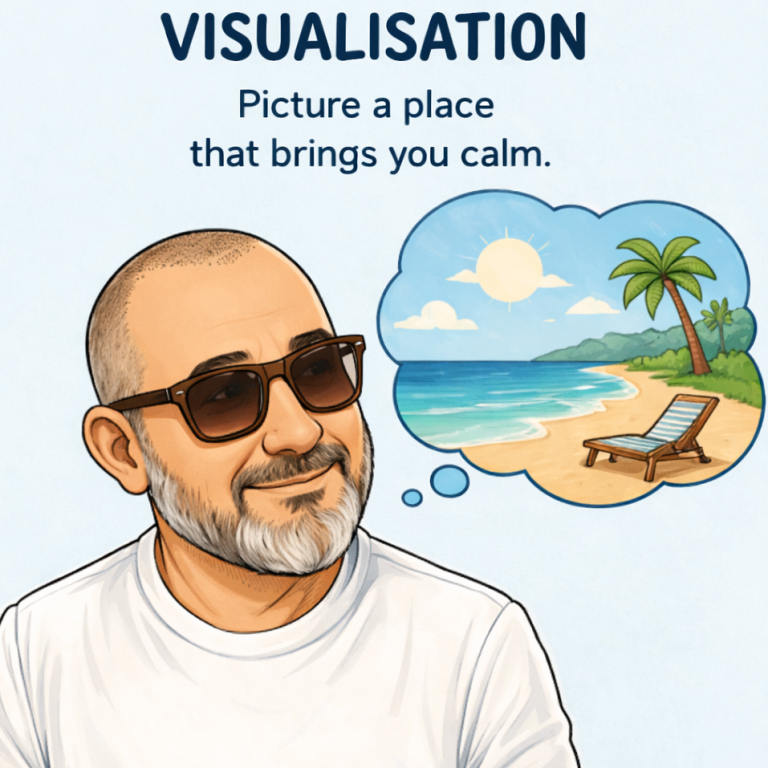
Visualisation means using your imagination to picture a place, memory, or scene that helps you feel calm and safe.
It could be a beach, a forest, a garden, or anywhere that feels peaceful to you.
What are the benefits?
Find a quiet place and get comfortable.
Close your eyes if that feels okay.
Now imagine a place where you feel calm.
Ask yourself:
- What can I see?
- What can I hear?
- What can I smell?
- How does this place feel?
Take slow breaths while you picture it.
How to try it
When to use it?
Visualisation can help you:
- Feel calmer
- Reduce stress
- Slow down busy thoughts
- Feel safer and more settled
You can use visualisation when you feel:
- Stressed
- Worried
- Overwhelmed
- Unable to switch off
- Finding it hard to sleep
A gentle reminder
There is no perfect picture.
Your calm place can be real or imagined.
Choose whatever helps you feel safe and relaxed.
Production Date: May 2026
Next review: May 2029
🤝 Social Connection
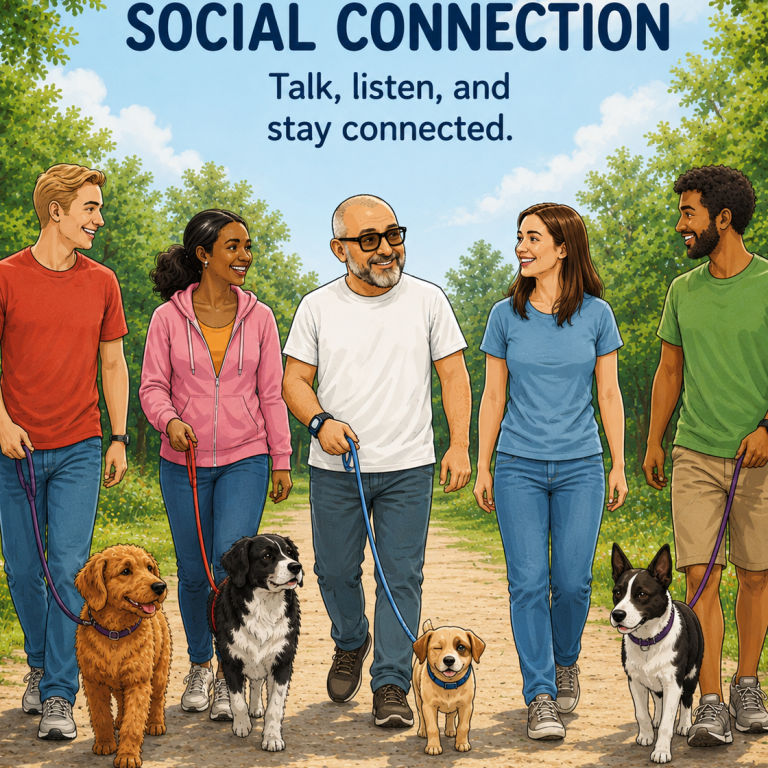
Social connection means spending time with people who help you feel heard, supported, and valued.
This could be family, friends, neighbours, colleagues, or people in your community.
What are the benefits?
Start with one small step.
You could:
- Call a friend
- Send a message
- Meet someone for a walk
- Join a group or activity
- Have a chat with someone you trust
Small connections can make a big difference.
How to try it
When to use it?
Talking with others can help us feel less alone.
Social connection can help you:
- Feel supported
- Improve your mood
- Build confidence
- Feel part of something
You can focus on social connection when you feel:
- Lonely
- Isolated
- Low in mood
- Like you need support
- Disconnected from others
A gentle reminder
You do not need lots of friends.
One kind conversation can make a difference.
Connection starts with one small step.
Production Date: May 2026
Next review: May 2029
💚 Self-Compassion
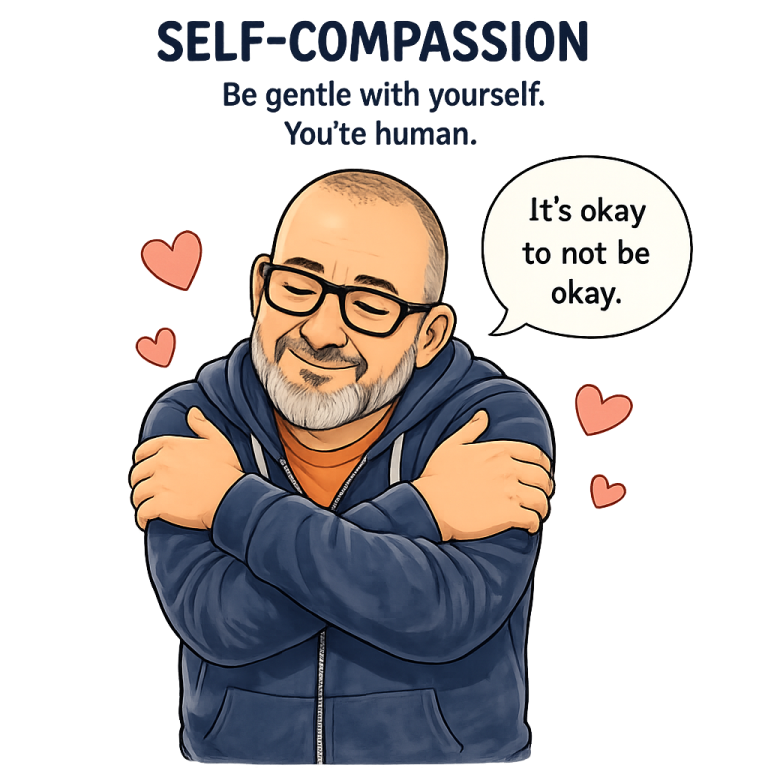
Self-compassion means treating yourself with kindness, understanding, and care.
It means talking to yourself the way you would talk to a good friend.
What are the benefits?
When things feel hard, pause and ask yourself:
- What do I need right now?
- What would I say to a friend?
- Can I be kinder to myself?
Try saying:
- “I am doing my best.”
- “It is okay to have difficult days.”
- “I do not have to be perfect.”
How to try it
When to use it?
Life can feel hard sometimes.
Being kind to yourself can help you:
- Feel calmer
- Build confidence
- Cope with mistakes
- Feel less stressed
- Improve your wellbeing
You can focus on social connection when you feel:
- Lonely
- Isolated
- Low in mood
- Like you need support
- Disconnected from others
A gentle reminder
You are human.
Nobody gets everything right all the time.
Being kind to yourself is not selfish—it is important.
Production Date: May 2026
Next review: May 2029
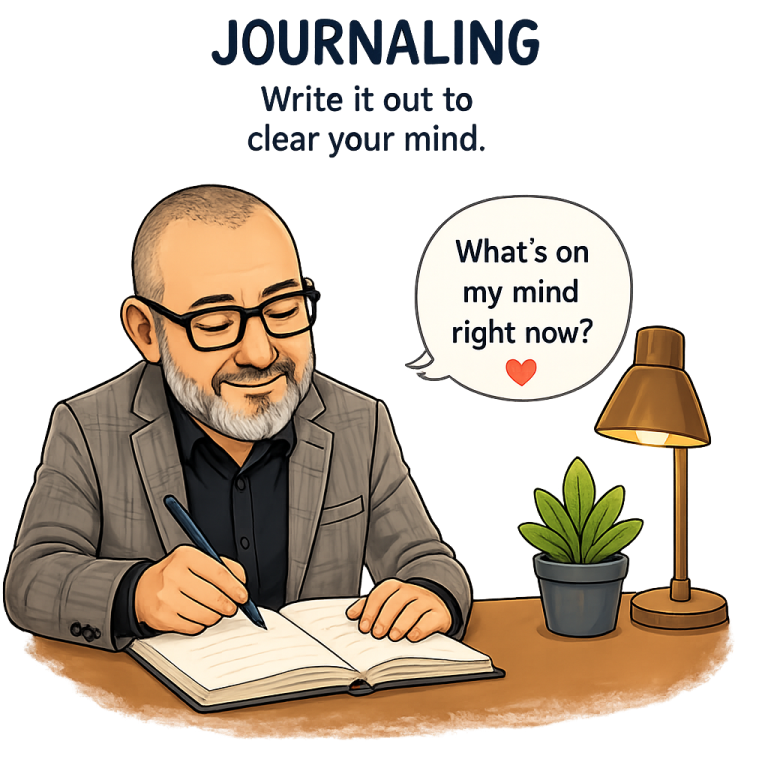
📝 Journaling
Journaling means writing down your thoughts, feelings, or experiences.
It can help you understand what is on your mind.
What are the benefits?
Take a notebook or piece of paper.
Write about:
- How you feel today
- What is on your mind
- What went well today
- What you need right now
There is no right or wrong way to write.
How to try it
When to use it?
Writing things down can help you slow your thoughts and make sense of your feelings.
Journaling can help you:
- Feel calmer
- Understand your emotions
- Spot patterns
- Solve problems
- Let go of worries
You can try journaling when you feel:
- Overwhelmed
- Worried
- Sad
- Confused
- Like your mind feels busy
It can also be helpful at the start or end of the day.
A gentle reminder
You do not need perfect words.
Just write what feels true for you.
Your journal is for you.
Production Date: May 2026
Next review: May 2029